Discover why jasmine and instant rice make ideal backpacking meals, plus fuel-saving cooking methods like boil-and-soak and cold-soak for the trail.
Gigacamping.org is reader-supported. When you buy through links on our site, we may earn an affiliate commission. As an Amazon Associate, we earn from qualifying purchases.
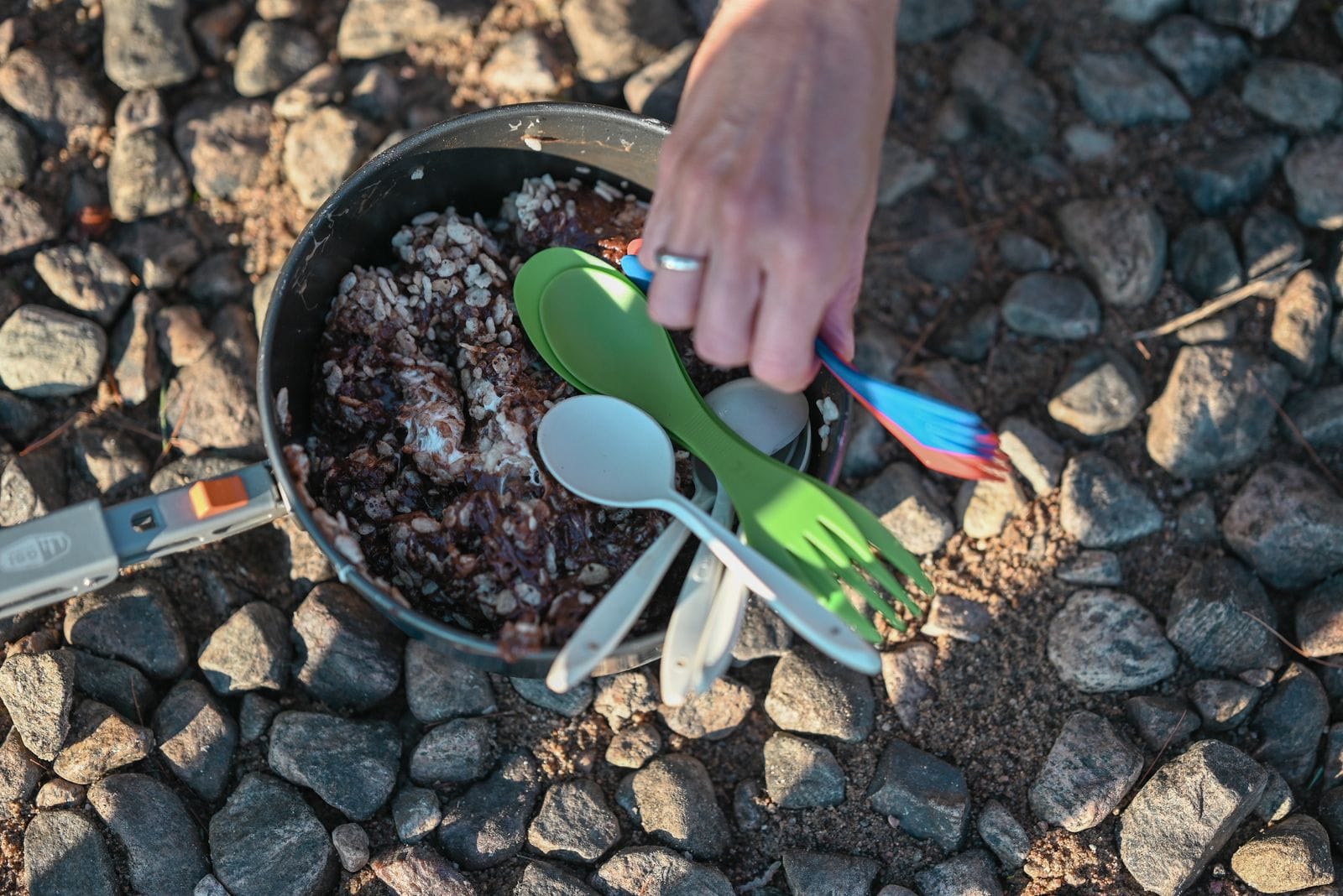
Rice does not get much attention in backpacking gear talk, but it deserves a spot near the top of any trail food list. It is cheap, it packs flat, it barely weighs anything once it is dried, and it turns almost any other ingredient you carry into a real meal instead of a snack. For hikers who are tired of choosing between bland energy bars and expensive freeze dried pouches, a bag of rice is one of the simplest upgrades you can make to a backpacking menu.

Photo by Amber Faust on Unsplash
Ask a group of long distance hikers what they eat most nights and rice comes up constantly, usually paired with a dehydrated sauce, a handful of jerky, or whatever vegetables survived the first two days of the trip. The reasons are practical rather than trendy.
Dry rice is dense with calories relative to its weight, and because it has almost no moisture left in it, you are not paying a weight penalty to carry water you will add back in later at camp. A single cup of dry rice turns into roughly three cups once cooked, so a small bag stretches across several dinners without weighing down your pack. For a multi day trip where every ounce matters, that ratio of stored calories to carried weight is hard to beat with fresh food.
Rice is mostly complex carbohydrate, which means your body breaks it down more gradually than it does simple sugars from candy or sports drinks. That slower release helps you avoid the energy crash that comes an hour after a sugary snack, and it gives you a fuller feeling at the end of a long hiking day when your body actually needs to refuel and recover overnight.
Not all rice behaves the same way once you are away from a home kitchen. Brown rice has more fiber and nutrients, but it can take thirty minutes or longer to cook fully, which burns through fuel that backpackers would rather save. Jasmine rice, on the other hand, is a softer, more fragrant long grain variety that cooks noticeably faster than brown rice and holds its texture well once rehydrated, which is exactly what you want after a day of hiking when you are hungry and low on patience.
Jasmine rice is a favorite for trail cooking thanks to how quickly it cooks down, a full jasmine rice brand comparison can help you pick one that holds up well after a long hike.
Instant or minute rice takes the convenience even further. It has already been cooked and dehydrated at the factory, so on the trail you are really just rehydrating it rather than cooking it from scratch. That makes it the fastest option of the three, though it comes at a small cost in texture and in the slightly higher price per serving compared to buying plain jasmine rice in bulk.
Fuel canisters are heavy and limited, so the goal on any backpacking trip is to get food cooked using as little heat as possible. Rice happens to be one of the easier trail staples to prepare efficiently once you know a couple of tricks.
Instead of simmering rice over a flame the entire time the way you might at home, bring your water to a full boil in a covered pot, stir in the rice, and then turn the stove off completely. Wrap the pot in a jacket, a stuff sack, or an insulated cozy and let it sit undisturbed for ten to fifteen minutes. The residual heat trapped inside the pot finishes cooking the rice just as effectively as leaving the stove running, but it uses only a fraction of the fuel. This single habit can stretch one small fuel canister across several extra days on the trail.
Some ultralight hikers skip a stove entirely to save weight, and rice can still work in that setup as long as you plan ahead. Instant rice is the better candidate here because it has already been cooked once, so it rehydrates in cold water far more reliably than raw jasmine rice does. Add rice and water to a sealed container in the morning or a couple of hours before dinner, let it sit while you keep hiking, and by the time you stop it should be soft enough to eat straight from the container.
Trail cooking is not the place to eyeball measurements the way you might in a home kitchen. A rough starting point for jasmine rice is one part rice to roughly one and a quarter parts water, since the boil-and-soak method loses less water to evaporation than open simmering does. If your rice still feels a little firm after resting, add a splash of hot water, cover it again, and give it another few minutes before you decide it needs more direct heat.

Photo by Oriol Pascual on Unsplash
Plain rice on its own is filling but not exactly exciting after the second or third night. The good news is that it pairs easily with almost anything else you might already be carrying. A packet of dehydrated vegetables, a spoonful of powdered curry or bouillon, a handful of dried lentils, or shelf stable jerky all turn a pot of rice into something closer to a real dinner rather than a plain side dish.
Because rice has a mild flavor, it also does a good job of stretching stronger flavored ingredients further. A small pouch of dehydrated chili or a packet of instant miso can season an entire pot of rice, which means you get more meals out of the seasoning you carry instead of using it all in one sitting. Adding a spoonful of oil or a small packet of nut butter at the end also boosts the calorie count without adding much weight, which matters on longer trips where your body is burning through reserves faster than you can replace them.
Rice travels well because it is dry, but a few packing habits make it even more trail friendly. Portion it into resealable bags for each planned dinner before you leave home, rather than carrying one large bag you have to measure out at camp with tired hands and low light. Pressing the air out of each bag keeps things compact and reduces the noise of loose grains shifting around in your pack.
Keep rice away from moisture during the trip, since damp conditions can cause it to clump or, in wetter climates, develop mold if it sits too long. A simple dry bag or a doubled up zip-top bag is usually enough protection for a weekend trip, and for longer expeditions many hikers vacuum seal individual portions so each one stays sealed until the night it is actually needed.
Most backpackers who rely on rice settle into a routine after a trip or two. Pre-measure each portion at home, boil water at camp, stir in the rice, cover the pot, insulate it, and let the residual heat do the rest of the work while you set up your tent or filter water for the next day. By the time camp chores are done, dinner is usually ready with very little fuel spent and almost no cleanup beyond rinsing a single pot.
It is not a flashy meal, but that is part of the appeal. Rice is predictable, it is forgiving if you get the water ratio slightly wrong, and it gives you the calories and steady energy you need to get up and hike again the next morning. For a food that weighs almost nothing dry and stretches across so many dinners, it earns its place near the top of almost every backpacking food bag.