Choosing and Using Emergency Equipment for a Camping Trip
When you set off on the camping trips you should have put some thought into the potential dangers of camping in remote places, it shouldn’t stop you from going because any adventurous activity should contain at least a little risk but you do need to be prepared.
Dealing with emergencies on a camping trip is mostly down to prior preparation and planning and part of that planning will be packing the right equipment for any emergency.
Your first priority in emergencies is to take care of yourself and the members of your party. If anyone is injured, dealing with those injuries needs to be your first priority.
Choosing emergency equipment for your camping trip
First Aid Kit

Swiss Safe 2-in-1 First Aid Kit (120 Piece)
Your first aid kit should be large enough to, at an absolute minimum, provide enough aid to you and anyone you are camping with. If you are camping with a group of like-minded friends the best option might be to each carry a personal first aid kit. If you are camping with your children or a group of less experienced people a larger first aid kit might be necessary.
The minimum contents you should pack in your first aid kit, quantities should be adjusted depending on the size of your group, is as follows;
- Plasters (Band-Aids); will probably be your most used items, you should pack a variety of shapes and sizes to deal with all sorts of minor wounds.
- Antiseptic wipes; are another well-used first aid item, these can be used to clean and sterilize wounds before the application of a dressing.
- Latex gloves; to protect yourself from bodily fluids including blood while treating a wound.
- Painkillers; make sure you pack appropriate ones if you are camping with your children do you have age-appropriate painkillers? Do you have more than one type of painkiller in case your patient is allergic? I always carry paracetamol and ibuprofen.
- Scissors/shears; for cutting dressings to size and removing clothing to access, examine and treat wounds.
- A triangular bandage; for immobilizing and elevating injuries.
- Absorbent wound dressings (various sizes); are for larger wounds that are bleeding with the application of an absorbent dressing and pressure the bleeding can be stopped. If a wound is severe enough for you to use these larger dressings, especially if they bleed through then you must seek further medical attention as soon as possible.
- Blister treatment; if you will be walking a lot while camping blister treatments are a very good idea.
- Conforming bandages; for treating strains and sprains.
- List Element
Tourniquet: In extreme cases being able to stop the severe bleeding with a tourniquet might save a life, using a tourniquet is outside the realm of most first aid training but if you are camping in a remote area it might save a life.
Face Shield: for protecting yourself if you need to perform mouth-to-mouth resuscitation.
Repair Kit
Having to cancel a camping trip due to damaged equipment is very frustrating, and potentially dangerous if you can’t evacuate your campsite but have broken or damaged your shelter. In bad weather your tent and sleeping bag protect you from hypothermia so being able to repair them is very important.
You should always carry a basic repair kit, particularly for your tent but also to allow you to perform basic repairs to your clothing and backpack if necessary. You should always carry;
- Heavy-duty Repair tape for patching tears in your tent or waterproof clothing.
- Sewing kit; including several needles, including heavy-duty ones for fixing backpack straps if necessary. You will need strong thread such as waxed leatherworking thread or old-fashioned suture thread.
- Shock cord; this elasticized cord can be used to replace broken tent pole cords.
- Tent pole ferrules; if a tent pole breaks it can be splinted by using replacement ferrules for the ends of your tent poles sliding them into place and taping them securely is a lighter weight option than carrying spare poles.
Communication
Being able to call for help in emergencies is very important, you should have already left details of your planned movements with someone at home so if you don’t return they can send help, but your first option if an emergency occurred would be to call for help immediately.
To make this possible pack a mobile phone with a fully charged battery and a spare battery too. Keep your phone switched off unless you need it, maybe just to check in with the home in the evenings, and in case of emergencies.
Do not use up all your battery on social media, your Facebook friends can wait until you get back from camping to see all your pictures and updates but you might need that battery. It might even be worth having a specific camping phone, an older model with basic features which doesn’t eat through batteries so fast as modern smartphones.
In an emergency you might need to rely on more basic forms of communication such as torches and whistles, you may have used your phone to alert mountain rescue that they need to come and find you but how do they pinpoint your location when they get close.
The international distress signal is to blast your whistle six times, with each set of blasts separated by one minute. The same goes for torch flashes.
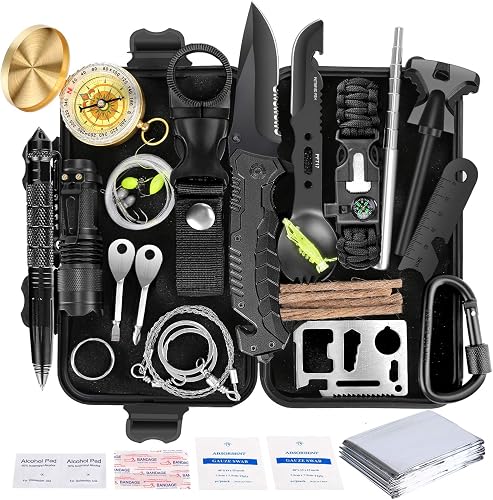
Survival Kit 35 in 1, First Aid Kit
If you are traveling very remotely or perhaps by sea in a kayak to your campsite also consider carrying pocket flares to signal for help or a pack of marker dye, this works in water or snow to mark your location.
Spares
As well as a spare battery for your phone you should make sure you have spares for other essential equipment, your torch, for example, this will be a very important piece of equipment in the evenings even if it is just to help you find your way to the latrine.
In an emergency, though your torch becomes a signaling device and you will definitely want spare batteries for it.
Remember as well spare fuel for your stove, spare matches or lighter, spare socks and clothes which might literally save your life if you were to take a tumble into a stream in the winter.
Emergency Shelter
As well as your tent, sleeping bag, and other basic camping equipment carry a space blanket or survival bag; you may have all the shelter you need in the form of your sleeping bag and tent or tarp but could you put that altogether if you were injured, a broken arm perhaps?
You should be able to get into a survival bag without too much difficulty and the shelter it provides might be enough to save your life. They are generally bright colors too so they should make it easier to spot you if you needed to be rescued.
If you are making excursions near your campsite during the day, you should carry these items with you in case you get into difficulty away from your camp and your main equipment.
Don’t forget that camping is fun but do remember to be prepared for potential emergencies.